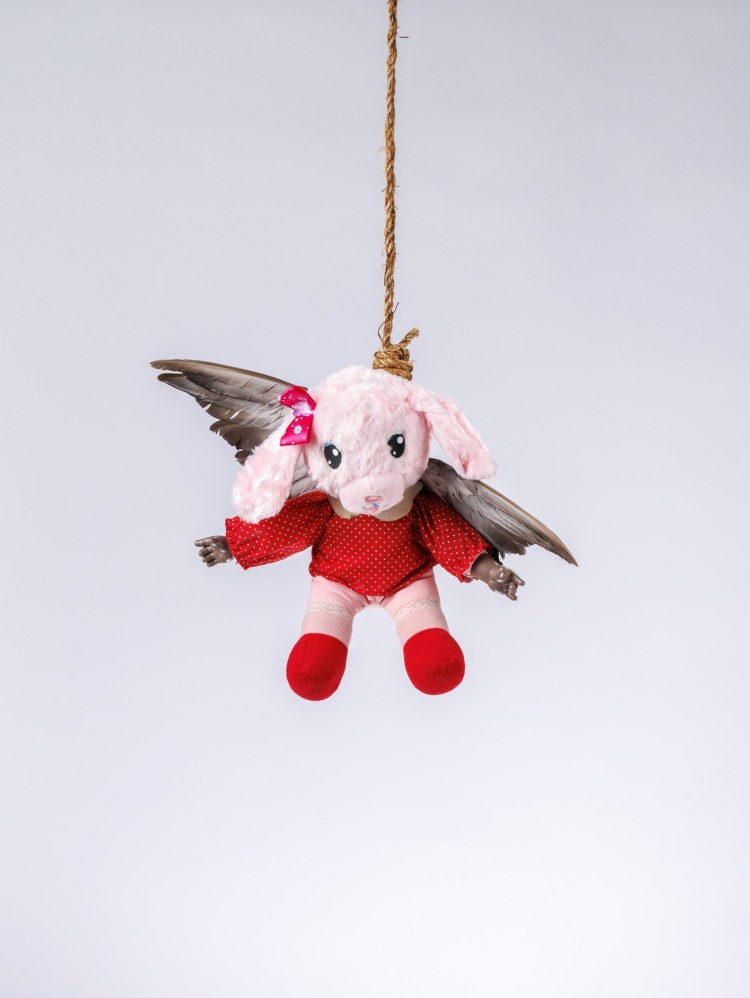
Precious Okoyomon, You have got to sometimes become the medicine you want to take, 2025 (detail). Artist-made children’s toys with taxidermied bird wings, rope, and motor, dimensions variable. Private collection. © Precious Okoyomon, Kunsthaus Bregenz. Image courtesy the artist. Photography by Markus Tretter 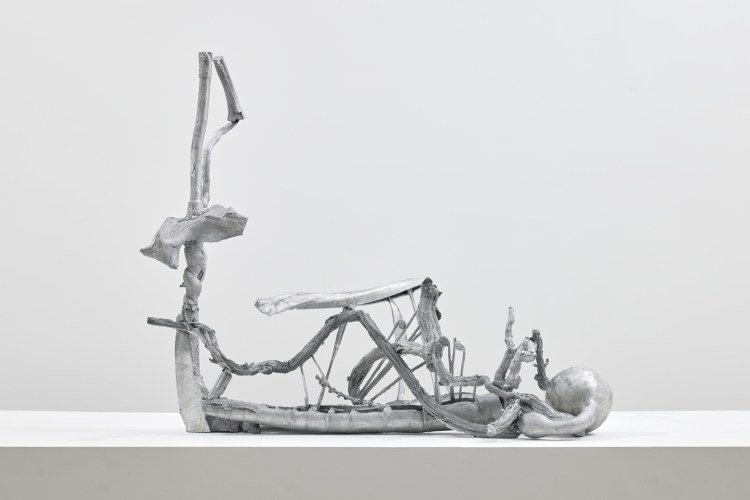
Sarah M. Rodriguez, Cover/Cross, 2025. Cast, carved, and welded aluminum, 43 × 35 × 47 in. (109.22 × 88.9 × 119.38 cm). Courtesy of the artist and Babst Gallery. Photography by Brad Trone 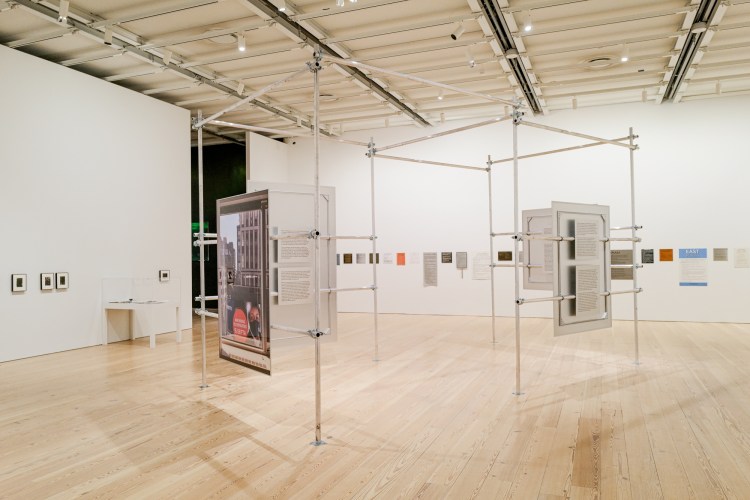
Installation view of Whitney Biennial 2026 (Whitney Museum of American Art, March 8–August 2026). Photograph by Jason Lowrie/BFA.com. © BFA 2026 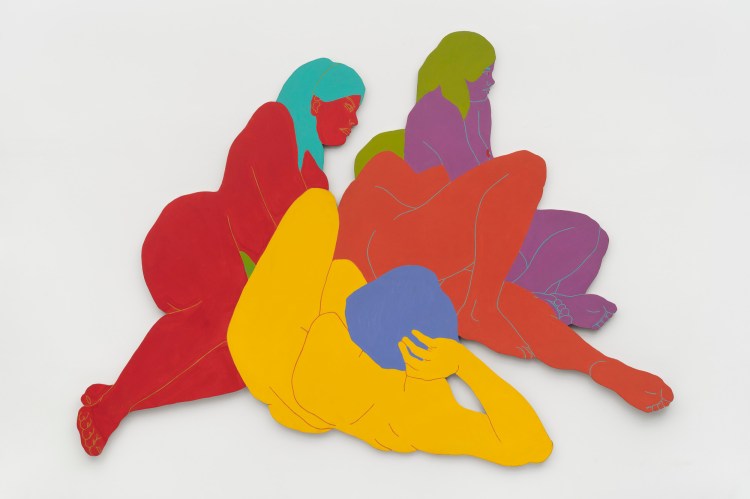
Carmen de Monteflores, Four Women, 1969. Acrylic on canvas, 83 × 112 in. (210.8 × 284.5 cm). Collection of the artist. © Carmen de Monteflores. Image courtesy the artist. Photography by Philip Maisel 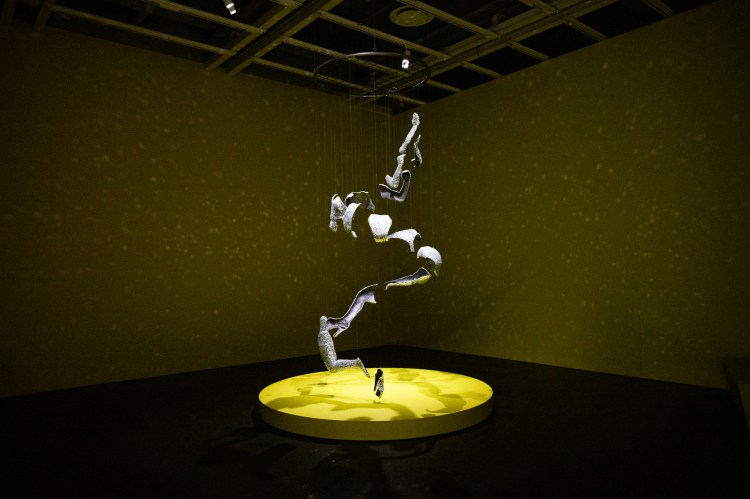
Installation view of Whitney Biennial 2026 (Whitney Museum of American Art, March 8–August 2026). Photograph by Darian DiCanno/BFA.com. © BFA 2026 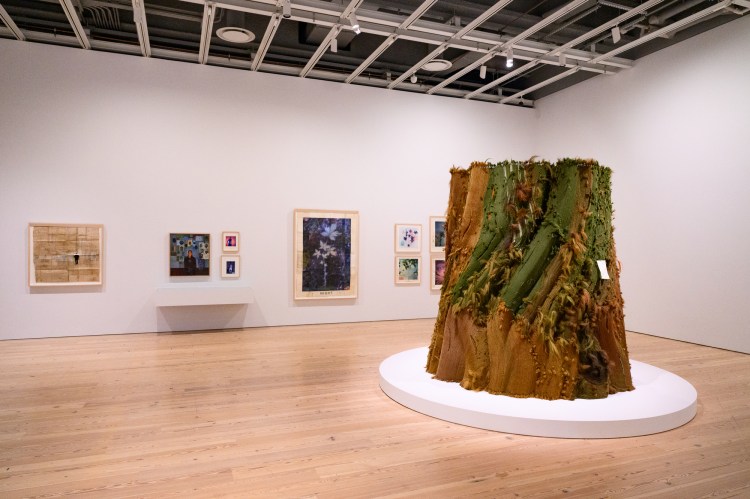
Installation view of Whitney Biennial 2026 (Whitney Museum of American Art, March 8–August 2026). Photograph by Jason Lowrie/BFA.com. © BFA 2026 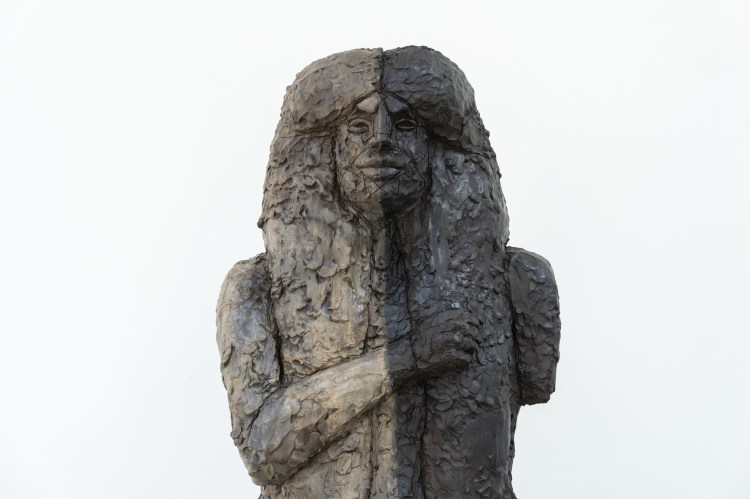
Raven Halfmoon, The Guardians, 2024 (detail). Bronze, 108 × 47.4 × 43.8 in. (274.3 × 120.4 × 111.3 cm). Edition of 3. Image courtesy the artist and Salon 94. © Raven Halfmoon. Photograph by Elisabeth Bernstein 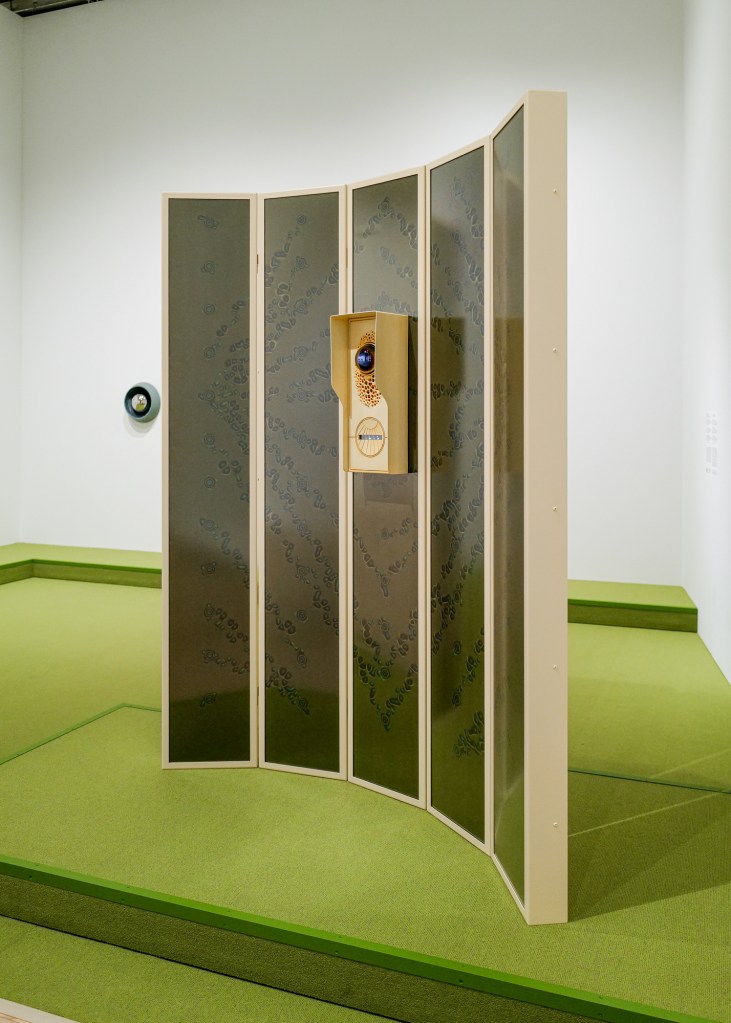
Installation view of Whitney Biennial 2026 (Whitney Museum of American Art, March 8–August 2026). Photograph by Jason Lowrie/BFA.com. © BFA 2026 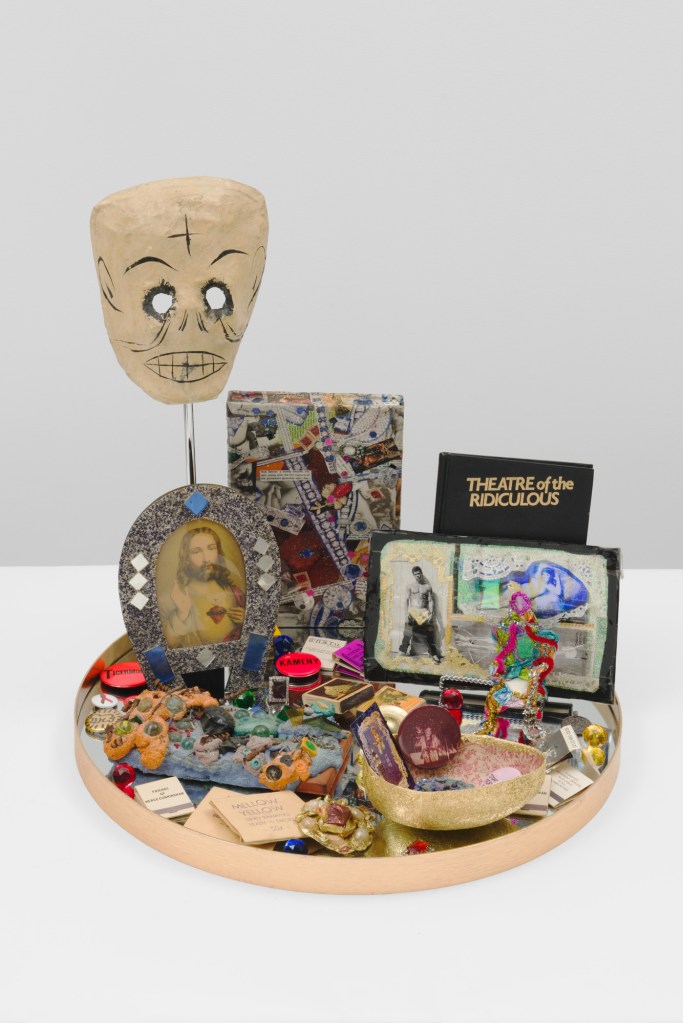
Agosto Machado, Downtown (Altar), 2024. Pins, matchbooks, mirror, and papier-mâché; plastic and metal objects; book (Theater of the Ridiculous), photograph, jewelry, bananaflavored straw packets, New York City subway tokens; and original artworks by Arch Connelly, Thomas Lanigan-Schmidt, and Gilda Pervin, 19 × 20 × 20 in. (48.3 × 50.8 × 50.8 cm). Collection of Jane Hait. © Agosto Machado. Image courtesy the artist and Gordon Robichaux, NY. Photography by Greg Carideo 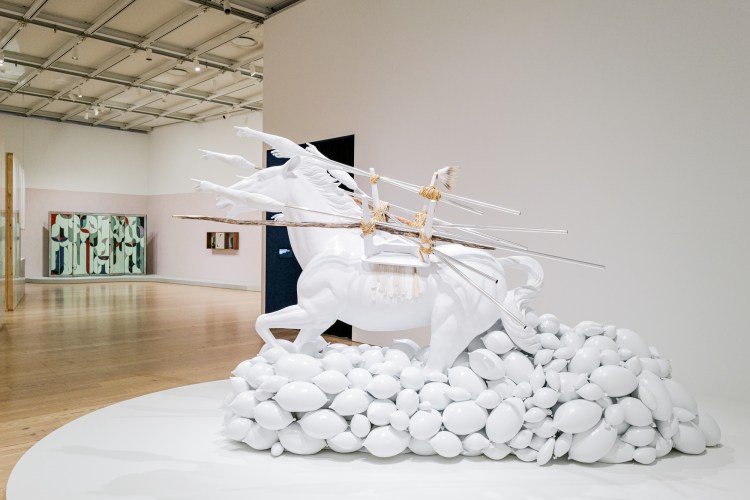
Installation view of Whitney Biennial 2026 (Whitney Museum of American Art, March 8–August 2026). Photograph by Jason Lowrie/BFA.com. © BFA 2026 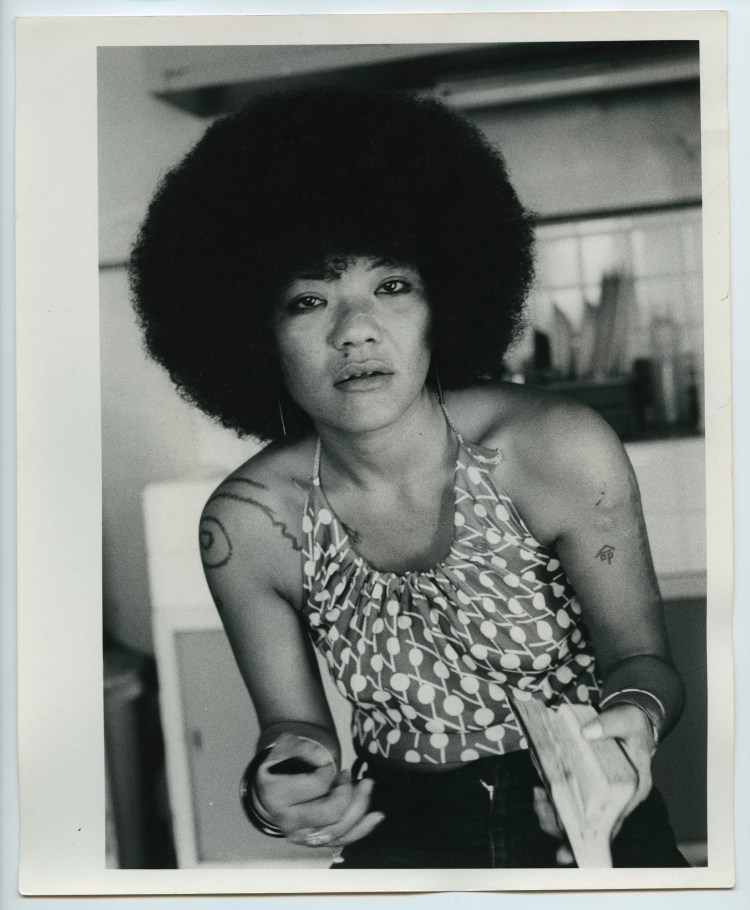
Mao Ishikawa, Untitled, from the series Akabanaa (Red Flowers), 1975-77. Gelatin silver print, 20 × 16 in. (50.8 × 40.6 cm). © Mao Ishikawa. Courtesy of POETIC SCAPE. Photography by Mao Ishikawa
Whitney Biennial 2026
Every year the President of the United States gives a State of the Union address, a speech that looks back and forward to what the country has achieved politically and perhaps socially. Famously, the first sentence is always the same: ‘The state of our union is strong.’
The same can’t be said of the state of American art survey known as the Whitney Biennial 2026 (March 8 – August 23, 2026). Within three dedicated floors and several outdoor spaces, the latest offering in a long line of critical assessments on the current arts scene has visitors wading through sets of ideas and themes that are familiar and rarely hold their attention for long. Environmental, historical, political, and social concerns are all here; with despair and irony, flickers of hope and resilience, but no answers or templates for action. Perhaps the point isn’t to provide answers, but to reflect on what has gone before.
That seems like a weak response to perilous times, but it could be that the arts haven’t found a way forward or simply isn’t ready to do so. As a result, Marcela Guerrero, the DeMartini Family Curator and Drew Sawyer, the Sondra Gilman Curator of Photography with Beatriz Cifuentes, Biennial Curatorial Assistant, and Carina Martinez, Rubio Butterfield Family Fellow have chosen to take a middle ground in their themes of interconnected relationships in nature, family, social, and political spaces, but this decision flattens any impact the exhibition might have. Discomfort of minds or provocation of emotions could be possible in this show, but only as a flicker of a half thought passing by, leaving no echo or memory. This isn’t to say there aren’t many good artworks in the exhibition, and some are very effectively placed in their areas, but on the whole, the rhythm and pacing of the show lacks energy.
The main exhibition begins on the fifth floor, with drawings and objects by Emilie Louise Gossiaux occupying a large space in front of the elevators and staircase. All these artworks are small, and it’s unclear why they were assigned this area, as they don’t fill, let alone dominate the expanse. To the right of this installation is something far stronger: a single work, a Black child doll dressed in a pink animal suit, placed very high up on the wall, representing a larger work by Precious Okoyomon to be installed by the end of March on the eighth floor. Okoyomon’s art explores the shifting boundaries of sweetness and violence, confrontation of ideas and acts that could have given a real jolt to visitors, one worthy of an important exhibition.
The sculptures of Sarah M. Rodriguez are well served in a space containing a floor to ceiling window overlooking the West Side Highway and the Hudson River. The cast, carved, and welded aluminum objects, placed on low pedestals, use forms of animals and plants to explore environmental themes, and the visitor’s eye can move between the artificial constructions of the art and the world outside the museum, considering the similarities and differences of both.
Oswaldo Maciá’s Requiem for Insects is a soundscape experience, with dim lighting, sixteen loudspeakers playing recordings of insect calls, interspersed with other audio forms, and incongruously, two large banners hanging at right angles to each other in a corner, with drawings of some insects. The sound is intriguing and non-continuous, which reflects a sort of call and response aspect that is part of the auditory world of nature.
The shaped canvases of Carmen de Monteflores are contrasted with the life size sculptures of sleeping children by Andrea Fraser, and while both artists display virtuoso technique, the canvases are more direct and imaginative, especially Via Crucis IV, 1967, an optical illusion painting with Pop Art influences, that goes beyond a surface interpretation.
Young Joon Kwak’s interesting sculpture of fragmented, mirrored pieces arranged in a loose spiral formation hanging from the ceiling space, suggesting movement while being still. As a result, the viewer takes on the role of choreographer and dancer to the artist, creating an active response to the work.
Some works do seem to be in dialog with each other: the space containing works by Malcolm Peacock, Johanna Unzueta, and Kimowan Metchewais achieves a harmony of ideas, techniques, and passion that is refreshing while also distinctly personal. In the next area, Enzo Camacho and Ami Lien provide a thoughtful but uneven look at political and environmental issues of the Philippines.
Continuing to the sixth floor, visitors meet head on Ali Eyal’s painting of emotion, memory, and perceptions populated with the mesmerizing details found in dreams, half remembered upon awakening. Preparatory drawings are also here, offering insight into his process.
The sculpture by Raven Halfmoon, located to the right, is in a niche space with a floor to ceiling back wall, connecting it to the outer world while also giving the impression of a quiet devotional space and natural light enhances the stoneware glaze with its exquisite tactile surface.
Emilio Martínez Poppe draws attention to different layers of US history, via photographs and interviews with people, creating a well edited and thoughtful work. By using photographs of window views from government buildings to remind of past landscapes, local history and contemporary interviews he links social and political changes in 20th & 21st centuries in a meaningful way.
David L. Johnson has a selection of POPS signage to discuss issues of public access and private rights in NYC. These signs are rarely read, but their legal and social impact has only grown over time. Many are written to reflect 21st century events such as the Occupy Wall Street movement, higher levels of homelessness, and the increase of surveillance tactics in the public and private spheres. Perhaps some people will find them alarming, but most may just be amused by the convoluted language of the law.
After this, it could be considered a relief to turn off the intensive thought by the mesmerizing kinetic art on screens by Samia Halaby. As the shapes and colors rapidly change, accompanied by lines of code, beeps and other sounds, the familiar computer imagery begins as soothing, but the speed of changing images keeps a low hum of agitation in the brain.
Further along, Cooper Jacoby presents a pointed statement about individuals surveilling their own spaces, and tragically, causing the deaths of other people simply for standing within that space, while nearby, Agosto Machado uses the framework of personal shrines and altars to commemorate and condemn the loss of loved and admired persons.
Akira Ikezoe’s deliberately flat, naïve-inspired style tells circular, self-contained narratives that have a logic all their own, while being slightly horrifying. Animals and robots are shown endlessly repeating activities as though on an assembly line, building and destroying things with no emotion displayed or wanted.
In contrast, Anna Tsouhlarakis’ sculpture SHE MUST BE A MATRIARCH, 2023 is big, effective, and humorous, surprising the mind with its takedown of heroic monuments, while also being impossible to be a replacement for said monuments. One can’t imagine any civic community agreeing to installing it, although it could be a huge tourist attraction.
One of the few unequivocally great selections in the show are Mao Ishikawa’s photographs: startlingly honest and direct, they show up the artificiality of nearby video art, and make it look vapid and pointless.
The delicate precision of Kamrooz Aram’s paintings is a delight, playing with the definitions of decorative and high art, harkening back to other cultures and histories of the portrayed objects. It proves the maxim that less is more, something many contemporary artists ignore.
Mariah Garnett video Songbook, 2024, is an experimental documentary about Ruth Deyo, a great, great aunt of the artist, and her life as a composer, expatriate, musician, and spiritualist in the early 20th century. It’s an interesting look at the cultural and historical influences of an original thinker, who today would probably been chosen for a Biennial slot.
In the end, the curators’ theme of ‘vibes’ is less of a good standard for a wide ranging show like a biennial than choosing ‘ideas’ or ‘convictions’. Perhaps next time, things will be different.
Whitney Museum of American Art, 99 Gansevoort Street, Hours: Wed – Thur: 10:30-6, Fri: 10:30-10, Sat, Sun, and Mon: 10:30-6, CLOSED TUESDAY. Admission: Adults: $30, Seniors: $24, Active university students (must show ID): $24, and Visitors with disabilities: $24 (includes admission for accompanying caregiver), 25 years and under: Free, Members: Free. In addition, Active Military and Veterans, Affiliate and Corporate Groups, Community Partners, IDNYC cardholders, and SNAP/EBT cardholders are eligible for reduced or free admission. Additional details here
On Fridays from 5pm – 10pm, free (Capacity is limited, must be booked through website). On the second Sunday of every month, admission is free from 10:30-6 (Capacity is limited, must be booked through website). Additional details here
 ArtsGazing